Nylon is one of the most widely used engineering plastics in modern industry.
First developed in 1935, it began as a “miracle fibre” in textiles. Today, it’s a critical material in manufacturing, used in gears, bearings, wear components, and structural parts across mining, transport, food processing, and heavy industry.
Nylon is a synthetic polyamide. It combines strength, durability, and versatility in a way few materials can. But its real value for engineers is in how it performs under load, heat and continuous use.
This guide explains what nylon is from an engineering perspective: how it’s made, how it behaves, and where it fits in real-world applications.
The Science Behind the Material: How is Nylon Made?
Nylon is formed through a chemical reaction called polymerisation. A common type (PA66) is created by reacting adipic acid with hexamethylenediamine. These combine to form what’s known as “nylon salt,” which is then heated under controlled conditions to create long polymer chains.
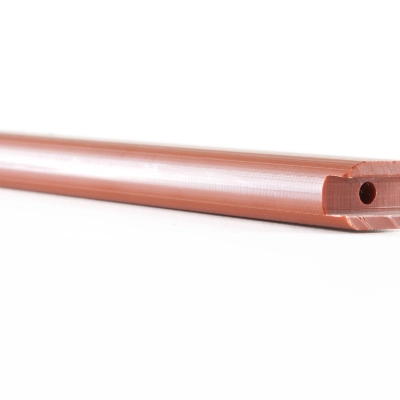
Once the dense, highly structured nylon material is formed, the molten nylon is extruded and cooled into solid form. It can be processed into fibres, but for engineering applications, it can be converted into pellets and extruded into stock shapes like rods and sheets.
Different grades of nylon come from variations in this chemistry. PA6, for example, is produced from caprolactam using a different polymerisation process compared to PA66. These differences directly affect strength, heat resistance, and moisture behaviour in finished parts.
Key Advantages of Nylon (Why It Outperforms Traditional Materials)
Nylon is often chosen due to its key advantages over other engineered plastic materials.
Strength-to-Weight Ratio
One of Nylon’s biggest advantages is its strength-to-weight ratio. Nylon components can be significantly lighter than steel while still handling substantial mechanical loads. This makes it ideal for applications where weight reduction improves efficiency or reduces wear on surrounding components.
Self-Lubrication & Low Friction
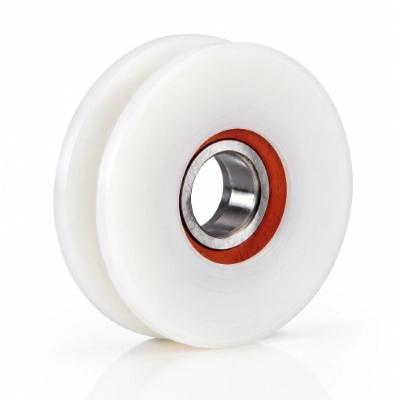
Nylon offers self-lubrication and low-friction surfaces, allowing parts like gears and bearings to run smoothly without constant lubrication. In environments where oil or grease isn’t practical, such as food processing, this becomes a major advantage.
Chemical & Heat Resistance
Nylon performs well in chemically and thermally aggressive environments. It resists oils, fuels, and many industrial chemicals, while also handling elevated temperatures depending on the grade. Some variants maintain stability close to 240 °C in short-term exposure.
Elasticity & Memory
Unlike some plastics, nylon can flex under load and return to its original shape. This makes it more forgiving in dynamic systems where impact or vibration is present.
Machinability
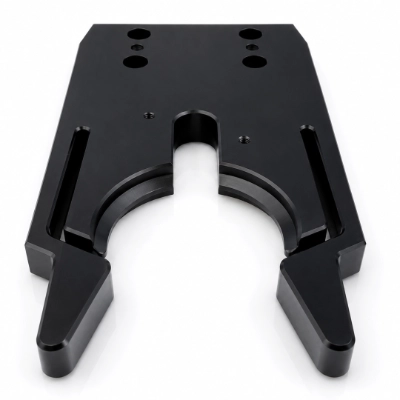
From a fabrication standpoint, nylon cuts cleanly, holds tolerances well, and is widely used in CNC machining for custom components.
Common Types and Grades of Nylon
Selecting the right grade of nylon is critical to performance and fit-for-purpose applications.
Nylon 6 (PA6)
Known for its toughness and ease of processing. It offers good wear resistance and is commonly used in cast forms for large components.
Dotmar products available in Nylon 6 include Ertalon 6SA, Ertalon 6PLA, Ertalon LFX, Ertalon 6XAU+, Nylatron GSM, Nylatron MC901, Nylatron NSM, and Nylatron 703XL.
Nylon 6/6 (PA66)
Provides higher mechanical strength and better heat resistance. It is often the preferred choice for injection-moulded parts and components exposed to higher temperatures.
Dotmar products in PA66 include Nylatron GS, Ertalon 66SA, Ertalon 66GF30
Nylon 12 (PA12)
Has lower moisture absorption. This makes it more dimensionally stable and suitable for high- precision 3D printing parts or flexible tubing applications.
Nylon 4/6
This nylon grade is designed for enduring extreme high-temperature environments. It maintains mechanical strength where standard nylons would soften. It’s suitable for automotive under-the-hood parts and electronics.
Dotmar products in Nylon 4/6 include Ertalon 4.6.
Drawbacks and Considerations
No material is perfect, and nylon is no exception. Understanding its drawbacks will help you find a product best suited for your application.
Moisture Absorption
The most important factor to consider is moisture absorption. Nylon is hygroscopic, meaning it absorbs water from the environment. This swelling can affect dimensional tolerances, which is critical in precision applications, but this is normally only an issue with thinner wall sections, as moisture absorption is very slow, and not normally a problem with thicker wall sections.
Environmental Impact
Nylon is petroleum-based and not biodegradable in the short term (it can take 30-40 years to decompose). While it can be recycled, sustainability depends on how it is sourced and used.
Static Buildup
Nylon has low electrical conductivity, which can lead to static buildup in some applications unless modified with additives.
Summary: Choosing the Right Nylon for Your Project
Nylon remains one of the most versatile engineering plastics available. It balances strength, durability, and machinability in a way that suits a wide range of industrial applications.
If your application needs high durability and impact resistance, nylon is a strong candidate.
For a full range of Dotmar engineering-grade nylon materials, including cast and filled variants, explore our nylon options to match the right material to your application.
Frequently Asked Questions
| Is nylon a plastic? | Yes. Nylon is a thermoplastic polymer widely used in engineering and manufacturing. |
|---|---|
| Is nylon a plastic or a fabric? | It can be both. Nylon is a plastic that can be processed into fibres for textiles or solid forms for industrial components. |
| Is nylon natural? | No. Nylon is fully synthetic and derived from petrochemicals. |
| Is nylon sustainable? | Nylon can be recycled, but it is not biodegradable. Sustainability depends on lifecycle use and material management. |
| Is nylon toxic? | In its solid form, nylon is safe for handling and use in industrial applications and many grades comply with food contact regulations. Risks are associated with raw chemical processing, not the finished material. |