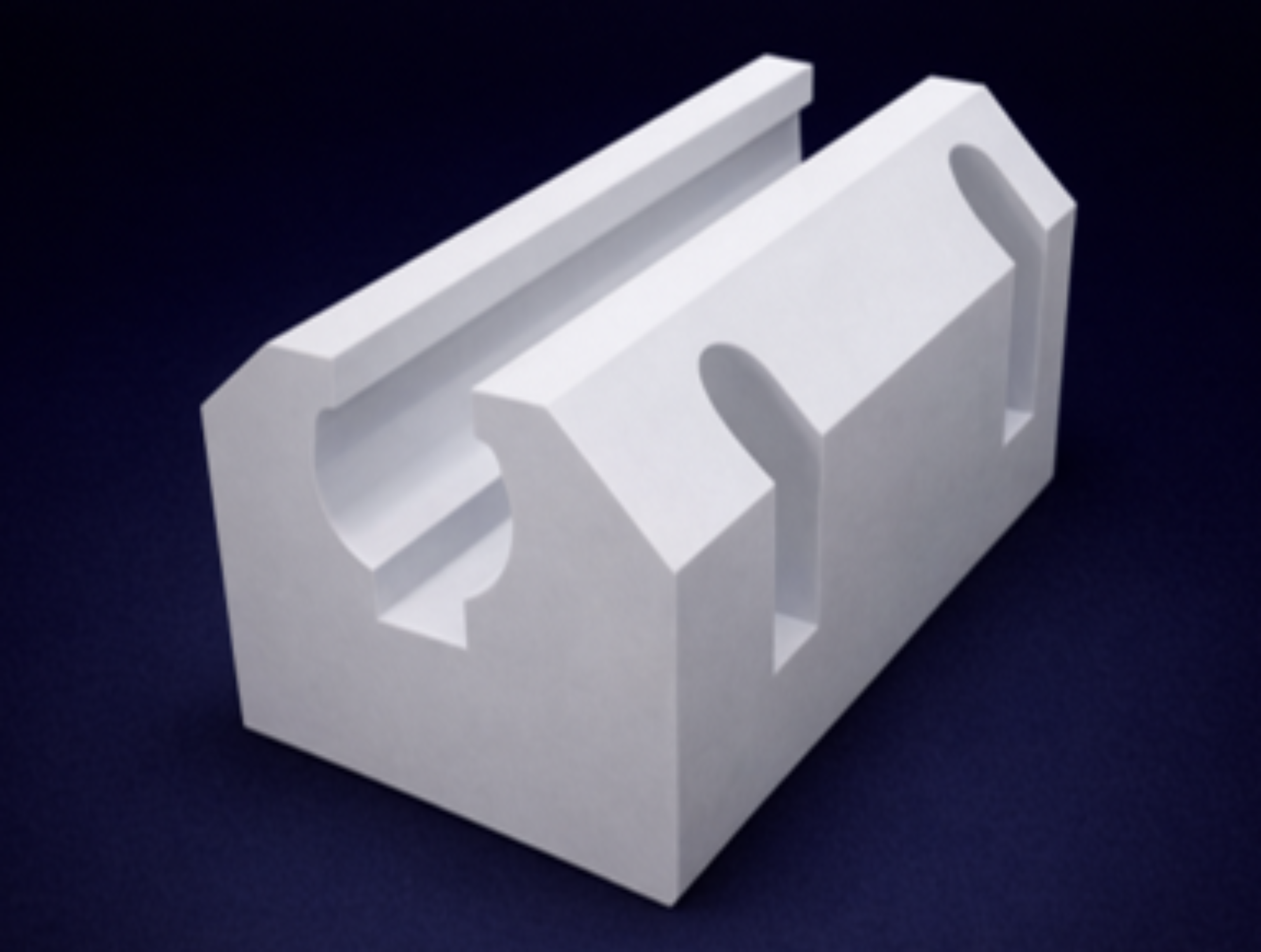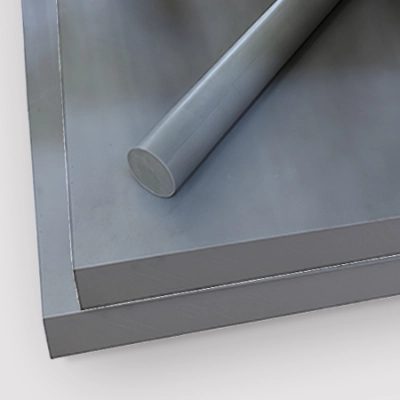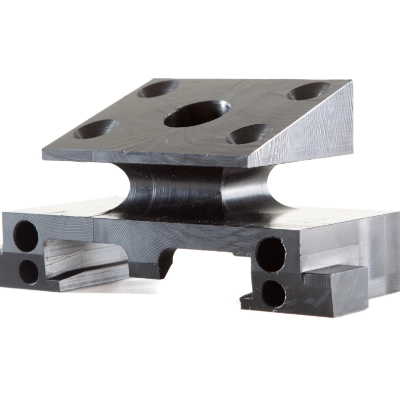
When engineers think about high-performance bearing materials, they often jump to expensive advanced engineering plastics. However, PETP delivers exceptional adhesion wear resistance — often matching or outperforming materials at a significantly higher price point. Dotmar stock Ertalyte PETP in Australia and Sustadur PETP New Zealand.
This polyester-based engineering plastic offers an impressive balance of stiffness, machinability, chemical resistance, and food contact compliance. Importantly, this engineering grade PETP should not be confused with standard PET used in plastic drink bottles. While both belong to the polyester family, the engineering-grade of PETP is specifically formulated for demanding industrial applications where dimensional stability, rigidity, and wear performance are critical.
What Makes PETP Different?
PETP (Polyethylene Terephthalate) sits within the engineering plastics range and is best recognised for its outstanding adhesion wear resistance, also known as bearing wear. This makes it particularly effective in high-speed and high-load plain bearing applications where sliding contact performance is essential.
In many cases, PETP performs on par with — and sometimes better than — more expensive advanced engineering plastics such as PEEK. This creates an attractive option for engineers seeking performance without unnecessarily increasing material costs.
However, it is important to understand that adhesion wear resistance and abrasion wear resistance are not the same thing. While PETP excels in bearing wear applications, its abrasion resistance is considered lower than materials such as nylon or UHMWPE
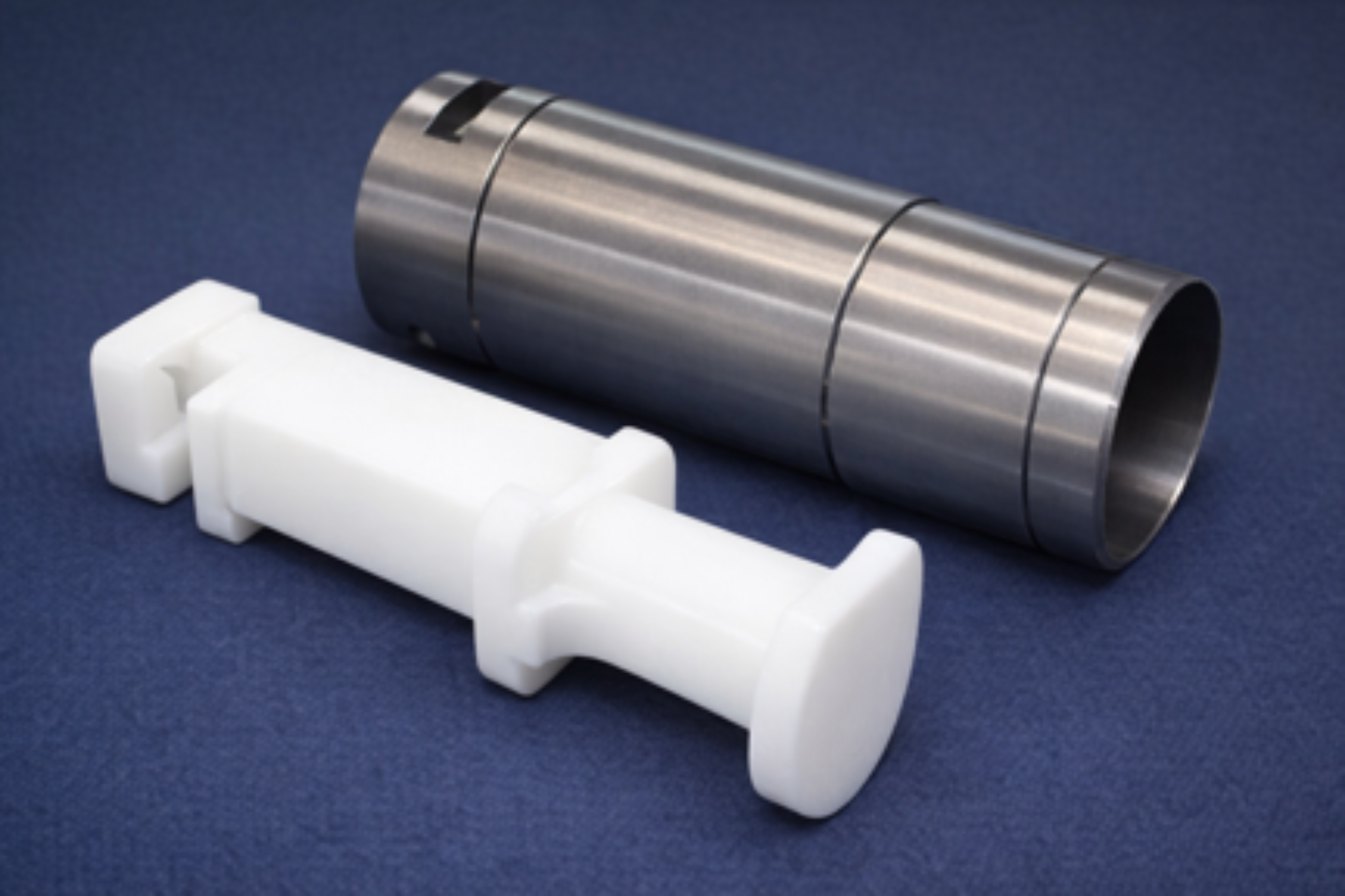
High Stiffness and Excellent Dimensional Stability
One of PETP’s strongest mechanical advantages is its stiffness, rigidity and low thermal expansion. Compared to many engineering plastics, PETP maintains excellent dimensional stability under load and change in temperature, helping minimise deformation in precision-machined components. This rigidity also contributes to improved machining performance, with machinability often compared to acetal. Components can typically be machined cleanly and accurately, making PETP a practical choice for tight-tolerance parts.
A Strong Performer in Food Industry Applications
PETP is widely used throughout the food processing industry due to its combination of food contact compliance, stain resistance, and chemical resistance.
Unlike some engineering plastics that can absorb contaminants or become discoloured over time, PETP offers excellent stain resistance, helping maintain a cleaner appearance in hygienic environments.
It also performs well against many acids and alkaline cleaning agents commonly used during food industry washdowns. Although PETP is not recommended for continuous exposure to very hot water above approximately 60°C, it remains suitable for standard hot water washdowns and limited steam sterilisation cycles.
Understanding the Temperature Limitations
Like all engineering plastics, PETP performs best when used within its design limits. At -20°C, PETP can lose approximately half of its impact strength, making it less suitable for highly impact-loaded freezer applications.
Where PETP Delivers the Greatest Value
PETP is often selected when engineers require:
- Excellent bearing wear performance
- High stiffness and rigidity
- Good dimensional stability
- Food contact compliance
- Strong stain resistance
- Reliable machinability
Common food industry applications include:
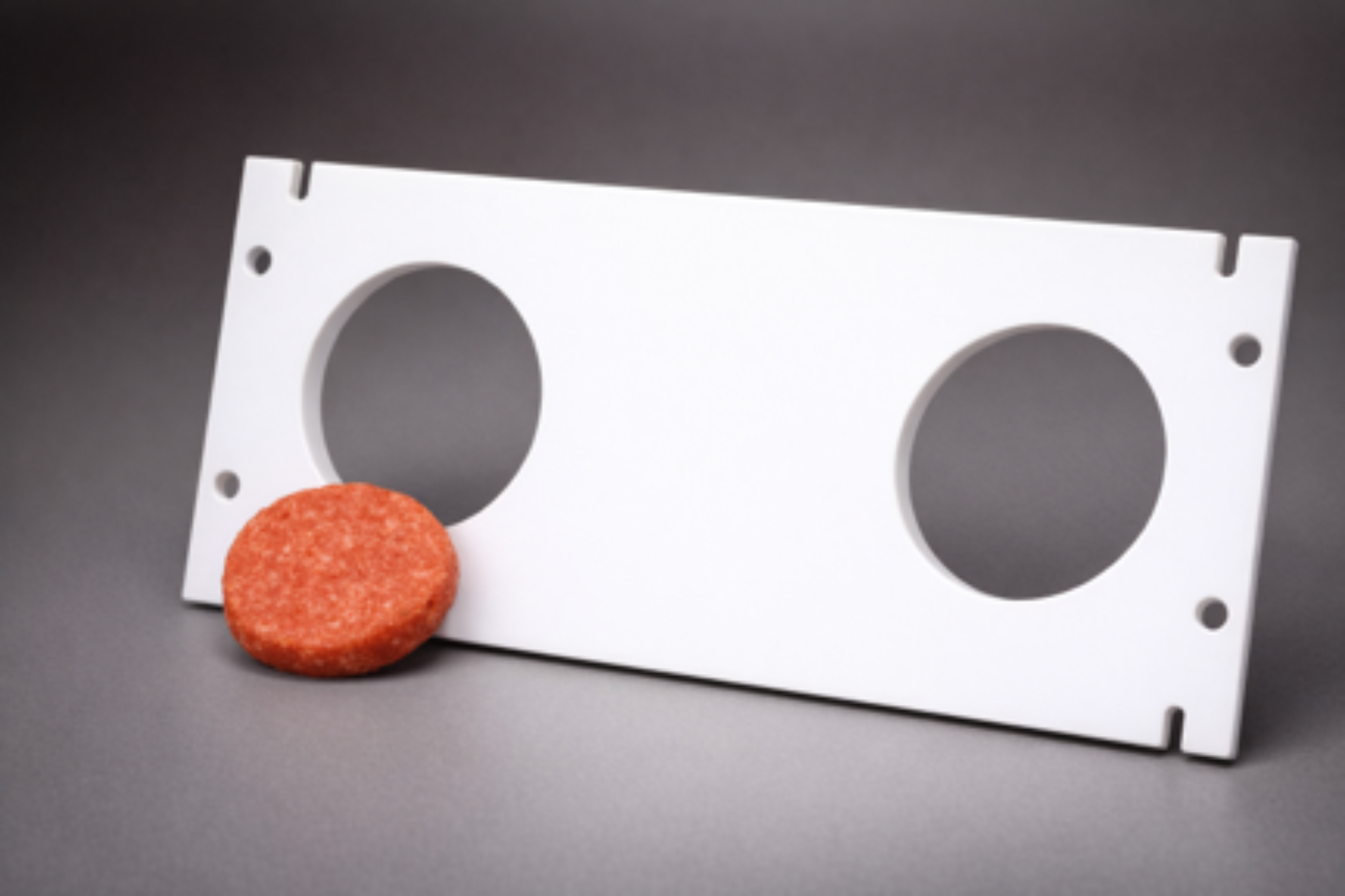
- Knock-out plates for meat patties
- Chicken nugget forming equipment
- Food handling components
- Wear guides
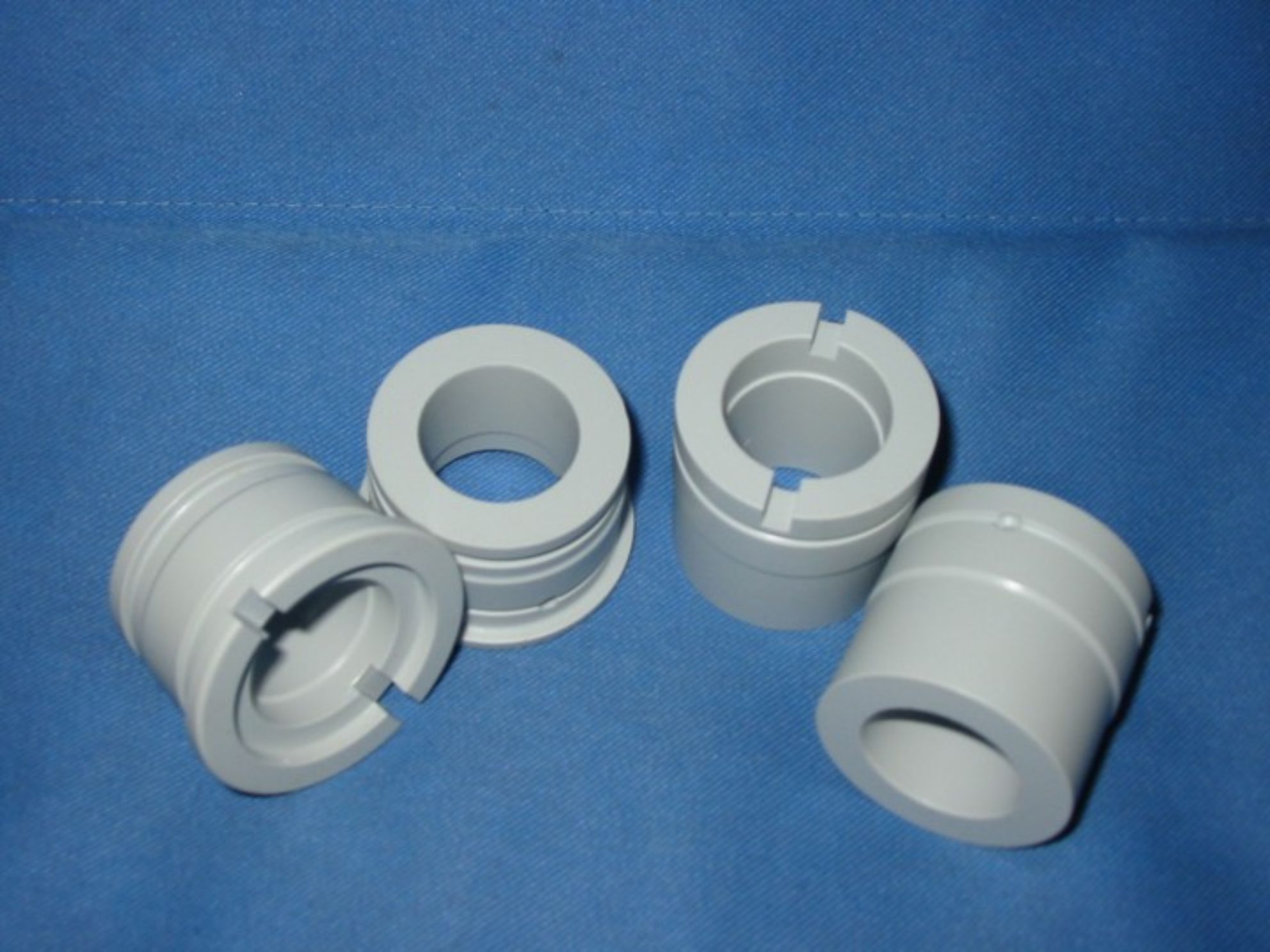
- Bushes and bearings in food processing machinery